6 Best Healthy Cookbooks for Beginners
A good first cookbook should make healthy home cooking feel more doable, not more complicated. These six books stand out for clear use cases, approachable ingredients, or the kind of practical guidance that helps a new cook build confidence.
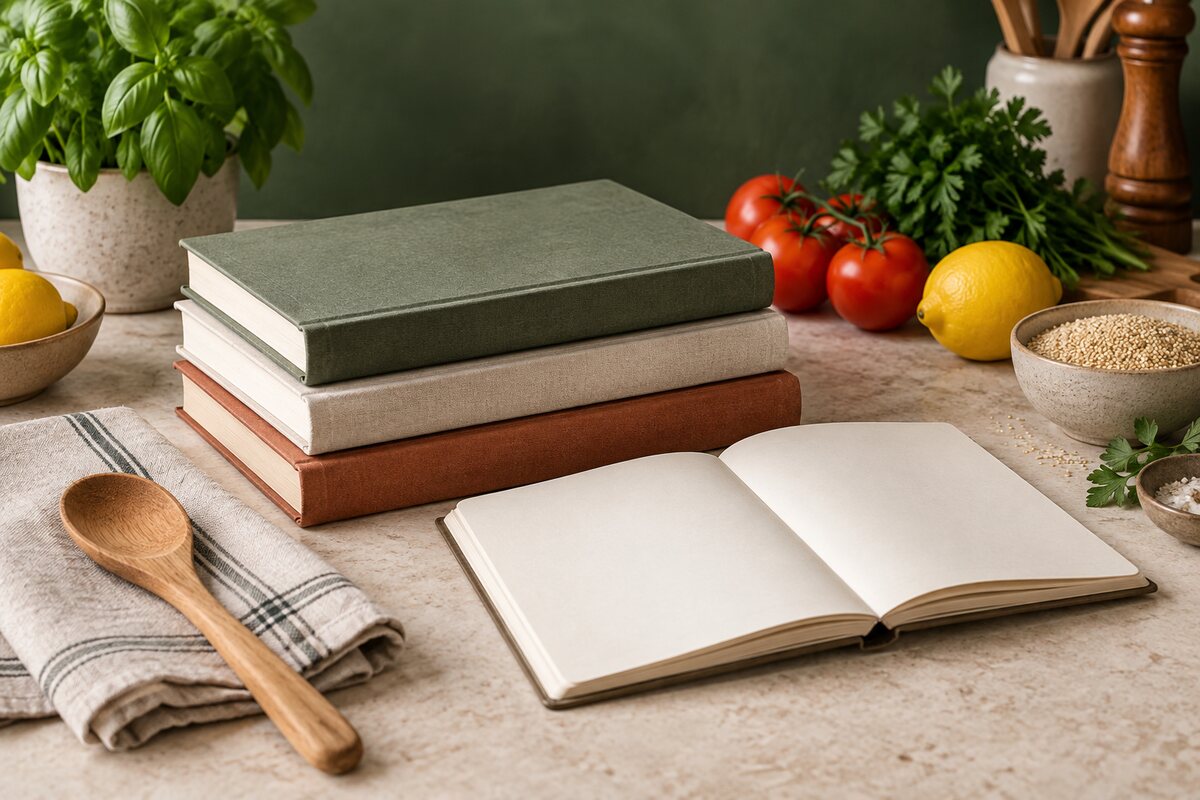
Image note: The featured image is an AI-generated illustration and is not evidence that these books were personally tested.
Here, “healthy” means a flexible style of everyday cooking that makes room for vegetables, fruit, beans, whole grains, and other minimally processed foods. It does not mean every recipe will suit every person, dietary restriction, or medical need.
How this guide was created: This is an editorial shortlist based on research, not hands-on product testing. We reviewed official publisher and author descriptions, stated features, recipe counts, and intended audiences. We favored clear scope, ordinary ingredients, useful instruction, and lasting value. We did not use retailer ratings, current prices, or commissions to rank these books.
Link disclosure: The book links below are currently informational and non-affiliate. If qualifying affiliate links are added later, NutritionCookbooks may earn a commission at no additional cost to you. Read our Affiliate Disclosure.
Quick picks
| Cookbook | Best for | What stands out | Beginner consideration |
|---|---|---|---|
| The Well Plated Cookbook | Best overall | Everyday recipes, common ingredients, swaps, and leftover guidance | A broad starting point rather than a specialized eating style |
| Skinnytaste Simple | Short ingredient lists | 120 recipes described by the publisher as using seven ingredients or fewer | Preview a sample to see how pantry staples and prep fit your routine |
| The Complete Mediterranean Cookbook | Mediterranean cooking | 500+ recipes spanning several Mediterranean regions | Excellent breadth, but a large book can feel less guided |
| Love Real Food | Vegetarian beginners | 100+ approachable meatless recipes with substitutions when possible | Vegetarian does not automatically mean vegan or suitable for every restriction |
| The Complete Plant-Based Cookbook | Plant-based breadth | 570+ recipes plus pantry and ingredient guidance | Reference-book depth may be more than a brand-new cook needs |
| Good and Cheap | Cooking on a tight budget | Practical budget focus and an officially available free first-edition PDF | Food costs vary, so avoid treating any fixed daily budget as current |
1. Best overall: The Well Plated Cookbook by Erin Clarke
The Well Plated Cookbook is the most broadly useful starting point in this list. Its publisher describes more than 130 new recipes built around accessible supermarket ingredients, along with “Market Swaps,” storage tips, reheating guidance, and ideas for turning leftovers into another meal.
Those features solve several problems beginners run into at once: unfamiliar ingredients, unused odds and ends, and uncertainty about storing what they cooked. The book’s lighter takes on comfort food should also feel familiar to households that are not looking for a strict eating plan.
- Choose it if: you want one flexible book for weeknights, family meals, and practical leftovers.
- Keep in mind: it is a general healthy-eating cookbook, not a vegetarian, Mediterranean, or medically tailored guide.
View the official publisher details for The Well Plated Cookbook.
2. Best for short ingredient lists: Skinnytaste Simple by Gina Homolka and Heather K. Jones, R.D.
The publisher describes Skinnytaste Simple as a collection of 120 dishes that use seven ingredients or fewer. It covers breakfasts, dinners, desserts, and several cooking methods, and each recipe includes a photograph, nutrition information, and icons for certain dietary attributes.
A clear ingredient limit can reduce decision fatigue and make the shopping list easier to manage. That makes this a sensible match for someone who wants fast wins before taking on a large reference cookbook.
- Choose it if: long ingredient lists are the main reason you avoid cooking.
- Keep in mind: a headline ingredient count does not tell you everything about prep time, pantry staples, or equipment. Preview sample pages before buying.
View the official publisher details for Skinnytaste Simple.
3. Best Mediterranean reference: The Complete Mediterranean Cookbook by America’s Test Kitchen
This is the strongest fit for a beginner who specifically wants to explore Mediterranean cooking. America’s Test Kitchen lists more than 500 recipes drawing from cuisines across Italy, Greece, Morocco, Egypt, Turkey, Lebanon, and elsewhere in the region. The publisher also emphasizes ingredients available at ordinary supermarkets and includes weeknight options.
The scope is a major strength: vegetables, beans, lentils, grains, seafood, poultry, meat, and sweets all have a place. It can function as a long-term reference as your confidence grows.
- Choose it if: you want range and technique within a Mediterranean-style pattern.
- Keep in mind: more than 500 choices can overwhelm a new cook. Start with one weeknight chapter and mark three recipes that share ingredients.
View the official book details for The Complete Mediterranean Cookbook.
4. Best vegetarian choice: Love Real Food by Kathryne Taylor
Love Real Food offers more than 100 meatless recipes intended for vegetarians, vegans, and meat-eaters alike. The publisher highlights approachable whole-food recipes and notes that gluten-free, dairy-free, and egg-free substitutions are included when possible.
It is a useful bridge for a household that wants to cook more vegetarian meals without relying on a rigid plan. The range includes breakfasts, salads, soups, main dishes, and baked recipes, so it can support more than one meal of the day.
- Choose it if: you want friendly, everyday vegetarian cooking that can appeal to a mixed household.
- Keep in mind: “vegetarian” is not the same as vegan, and substitutions are not promised for every recipe. Check each ingredient list for your needs.
View the official publisher details for Love Real Food.
5. Best plant-based reference: The Complete Plant-Based Cookbook by America’s Test Kitchen
For breadth, this book is difficult to outgrow. America’s Test Kitchen lists more than 570 recipes using vegetables, grains, beans, legumes, plant-based dairy, and plant-based meat products. The book also includes pantry guidance, ingredient science, and building-block recipes for staples such as broth, pesto, and dairy alternatives.
That depth is valuable for someone committed to learning plant-based cooking, especially when unfamiliar ingredients or substitutions are the sticking point. The publisher also notes optional variations using dairy products and eggs, so the book is positioned as flexible rather than exclusively strict.
- Choose it if: you want one substantial plant-based reference and enjoy learning why techniques work.
- Keep in mind: its size may be more reference than roadmap. If you eat strictly vegan, verify every variation and ingredient rather than relying on the title alone.
View the official book details for The Complete Plant-Based Cookbook.
6. Best for a tight food budget: Good and Cheap by Leanne Brown
Good and Cheap was created for people working with very limited grocery budgets. On her official site, Leanne Brown says the expanded second edition adds more than 20 recipes and that the first edition remains available as a free PDF. That free option makes it the lowest-risk place to begin if buying a cookbook is not practical right now.
The strongest lesson is not a fixed dollar figure; grocery prices vary by location, season, household, and year. The lasting value is its emphasis on adaptable meals and getting more from affordable ingredients.
- Choose it if: budget is the deciding factor or you want to evaluate a full cookbook before buying a print edition.
- Keep in mind: the recipe mix is broad, and no single budget estimate will be accurate for every reader today.
View the author’s official information for Good and Cheap.
How to choose your first healthy cookbook
- Name your real obstacle. If shopping feels hard, choose short ingredient lists. If deciding what to cook is hard, choose a narrower style. If technique is the issue, choose a detailed reference.
- Match the book to three normal nights. Picture a rushed weeknight, a leftover night, and a weekend meal. A useful book should have realistic options for at least two of them.
- Check ingredient overlap. Beginners save time and reduce waste when several recipes use the same vegetables, grains, herbs, or proteins.
- Preview the instruction style. Use an official sample when available. Look for clear timing, visual cues, substitutions, storage notes, and a layout you can follow while cooking.
- Confirm dietary fit recipe by recipe. A broad label such as “healthy,” “vegetarian,” or “plant-based” cannot guarantee that every recipe fits an allergy, prescribed diet, or personal preference.
- Buy one, then cook from it. Choose three recipes with overlapping groceries and repeat the easiest one. A smaller working routine is more useful than a shelf of unused books.
For ideas you can cook without buying a book, browse our healthy recipes, healthy cooking guides, and meal-prep resources. You can also return to the main Cookbooks page as our editorial library grows.
Frequently asked questions
What is the best healthy cookbook for a complete beginner?
For the broadest starting point, The Well Plated Cookbook is our editorial pick because its publisher highlights ordinary supermarket ingredients, swaps, storage guidance, and recipes for different skill levels. If your main obstacle is long shopping lists, Skinnytaste Simple may be the more practical first choice.
Which beginner cookbook is best for vegetarian meals?
Love Real Food is the most focused vegetarian option here. The Complete Plant-Based Cookbook offers much greater breadth, but its reference-book size may work better for someone who already knows they want to explore plant-based cooking in depth.
Should I rely on nutrition information printed in a cookbook?
Treat nutrition values as estimates unless the publisher explains a different method. Brands, substitutions, portion sizes, and preparation can change the result. Cookbook information is general and is not a substitute for individualized advice from a qualified professional.
Do I need the newest cookbook edition?
Not necessarily. Core cooking techniques and many recipes remain useful for years. A newer edition can be worthwhile when it meaningfully improves instructions, adds recipes, or updates availability. Always confirm the edition before ordering, because formats and inventory can change.